Company News
Why We Started DBGorilla
We've spent more than a decade managing and running some of the largest production database workloads in the world. And the thing that never stopped frustrating us was how predictable most outages were, and how nothing in the tooling was designed to stop them. Databases got faster, cheaper, and easier to run. Working with them as a developer never really got easier. That gap is why we're here.
 Cornelius·
We spent years watching developers struggle with databases while the industry kept building tools that only tell you something broke after it already broke. Alerts fire after the damage is done. Dashboards show you what already happened. The one person who really understands the database becomes a bottleneck, and when that person leaves, so does everything they knew.
We talked to engineering teams across financial services, healthcare, SaaS, and retail before we wrote a single line of code. The same story came back every time. Most teams don’t have a DBA at all, they’re just figuring it out as they go. The ones that do are typically at larger enterprises, and even then the DBA team is buried, juggling a wide range of databases and issues across the org with no real time to get ahead of anything. Either way, developers are on their own. They throw money at bigger servers instead of fixing the problem in the code, and nobody is there to tell them otherwise.
The problem was never that databases are hard. The problem is that the tooling was designed to react, not prevent. We started DBGorilla in February 2024 because we think that should change.
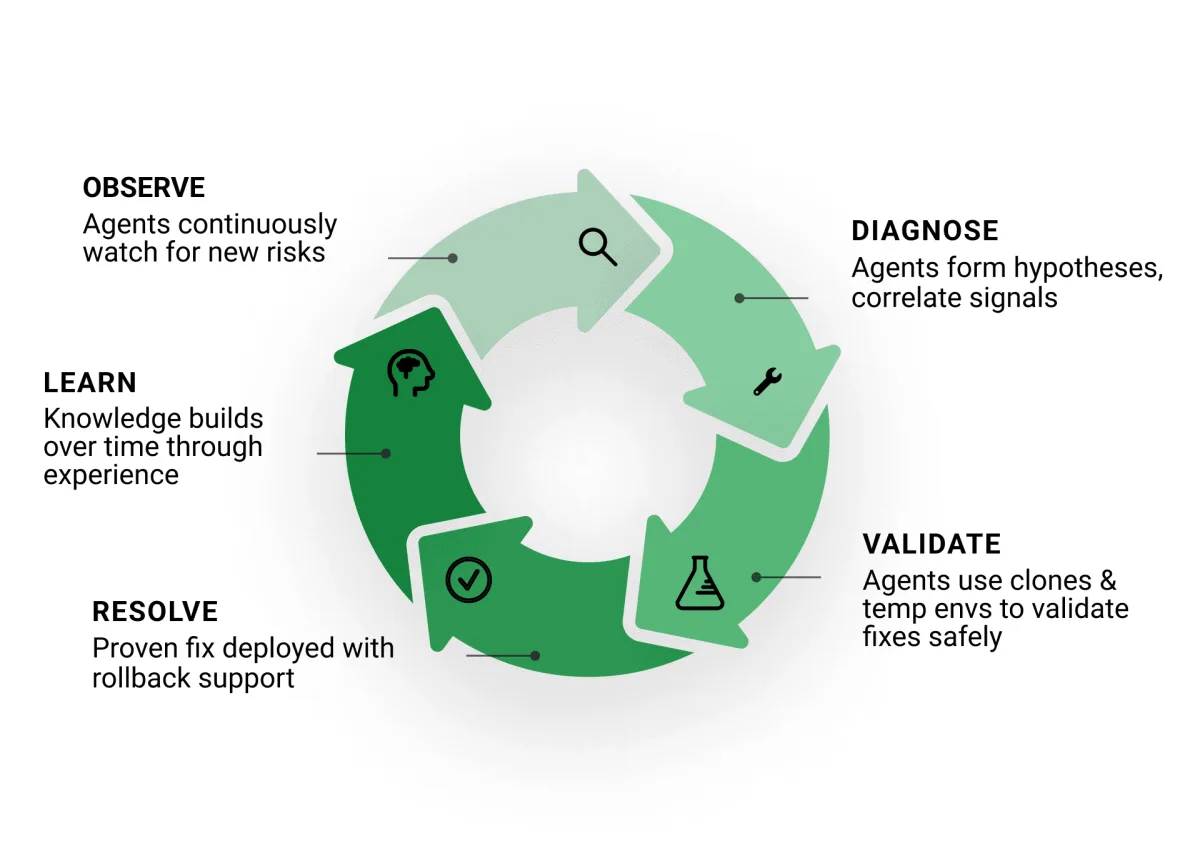
Most database incidents don’t appear out of nowhere. The warning signs are there well before anything breaks. If a system can spot those signals early, test a fix safely in isolation, confirm it actually works, and hand it to an engineer for approval, then most incidents never have to happen at all. We built DBGorilla around exactly that loop: observe, diagnose, validate, resolve, learn.
In practice, the system watches your database continuously not just for errors, but for slow patterns across queries, schema changes, workload shifts, configuration drift, and cost signals. When it spots something developing, it doesn’t just send an alert. It generates a hypothesis, tests a fix in an isolated environment, and surfaces the results with a full explanation. The engineer approves it, it deploys with rollback support, and the system gets smarter from every cycle.
We call this proof before production. We’re not asking developers to trust the AI. We’re asking them to look at evidence.
The expertise to solve these problems has always existed. iIt just wasn’t accessible to most teams unless they could staff it or afford a premium managed service. AI changed that. We can now put that same level of expertise inside every developer’s workflow, proactively, at a fraction of the cost. The database should not be the thing that slows your team down. We’re building DBGorilla to make sure it isn’t.