Apr 21, 2026
Article
I don't mean AI slop. I mean code that looks good and works …mostly.

Chris Lalonde | CEO & Co-founder
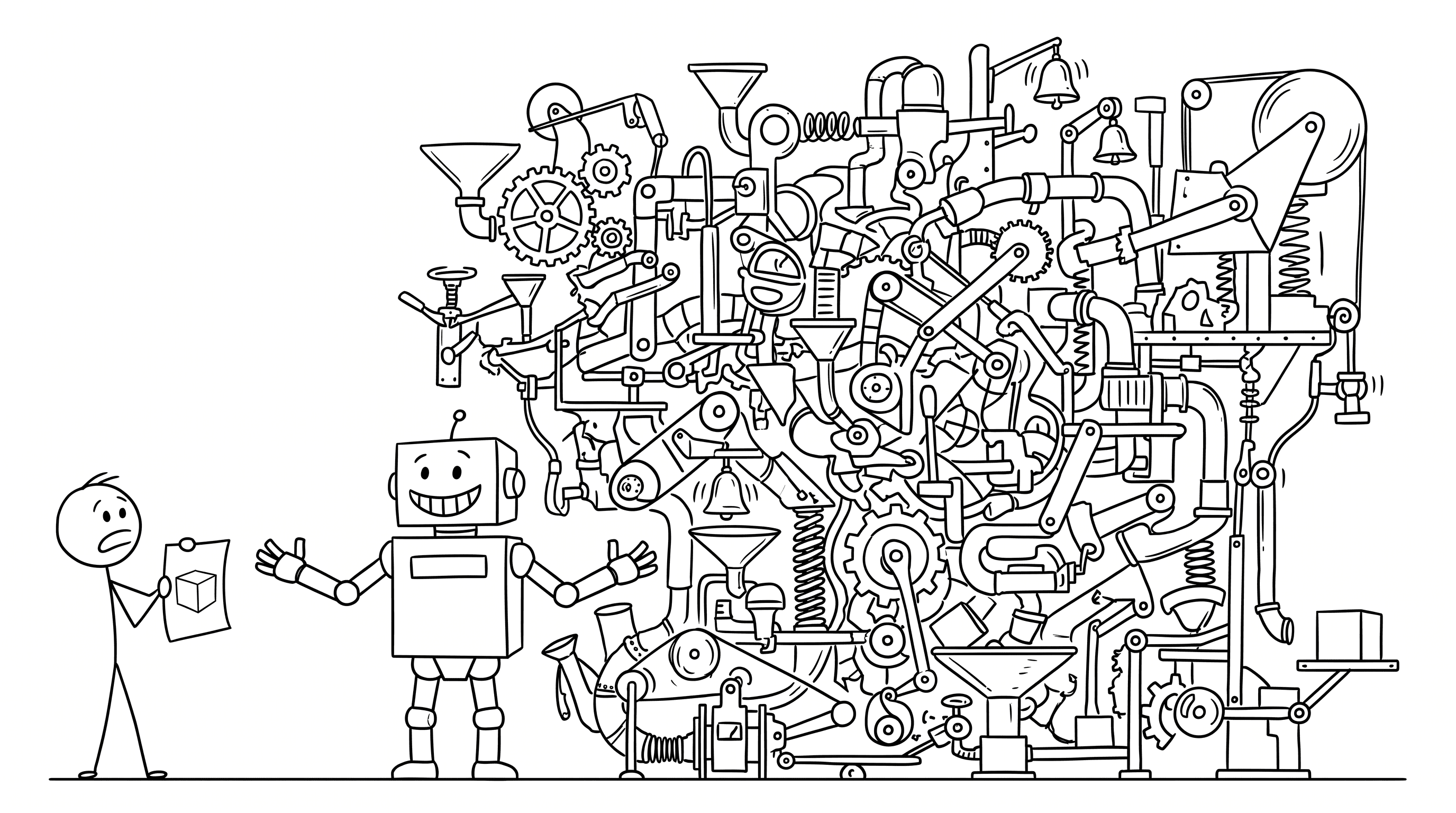
What I've found is that AI is accelerating a specific category of bugs: new dependencies and unnecessary complexity. A new library pulled in to solve something your codebase already handles. A feature added because it seemed related. A code path that exists because the agent made an assumption nobody asked it to make. Yet another API endpoint.
It's not that AI writes bad code. Often it's quite good. The problem is that it writes a lot of it, confidently, without the context a senior engineer carries around in their head. Left unchecked, that produces bloat. Duplicate dependencies. Unplanned code paths. New attack surfaces nobody mapped.
And it produces all of that fast.
That pace breaks the old model. When the volume of change is this high, review alone can't catch it. Quality has to be present at every stage; in the IDE, in the pipeline, in testing requirements, in how you preview and validate before anything ships. At DBGorilla that's exactly what we've built toward, not because we love process, but because at this velocity there's no other way.
The principle isn't new. Quality built in has been an engineering discipline for decades. It's just more important now, especially for smaller teams moving at AI speed.
The harder truth is that this isn't just a tooling problem. Tools help. But the posture has to come first. A team that treats quality as a phase will use all the right tools and still let this kind of debt accumulate endlessly.
AI doesn't just write more code. It writes more surface area for things to go wrong. The answer isn't slowing down. It's making quality impossible to skip and keeping the surface area manageable for AI and humans.